

USBF (UPFLOW SLUDGE BLANKET FILTRATION) technology is improved based on the classic activated sludge process combined with the Anoxic, Aerobic processes and suspended sludge zone in a biological treatment system. The combination of 3 modules in one treatment process creates great advantages in improving treatment efficiency, simplifying the system, saving raw materials, energy, and costs for the construction and operation of the system.
1. INTRODUCTION TO USBF TECHNOLOGY
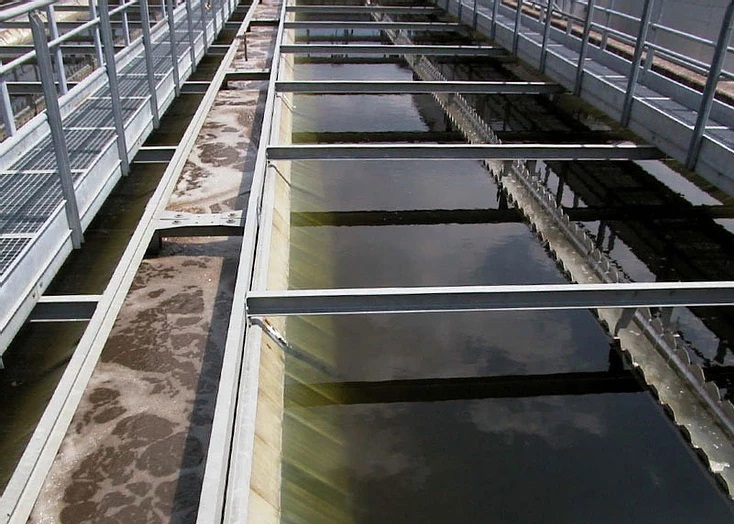
Wastewater treatment using USBF technology (Source: https://en.dsiqualitat.com)
USBF technology is designed to:
-
Remove dissolved organic substances (BOD, COD).
-
Nitration and denitrification.
-
Phosphorus removal.
2. STRUCTURAL CHARACTERISTICS AND OPERATING PRINCIPLE
2.1 Structural characteristics:
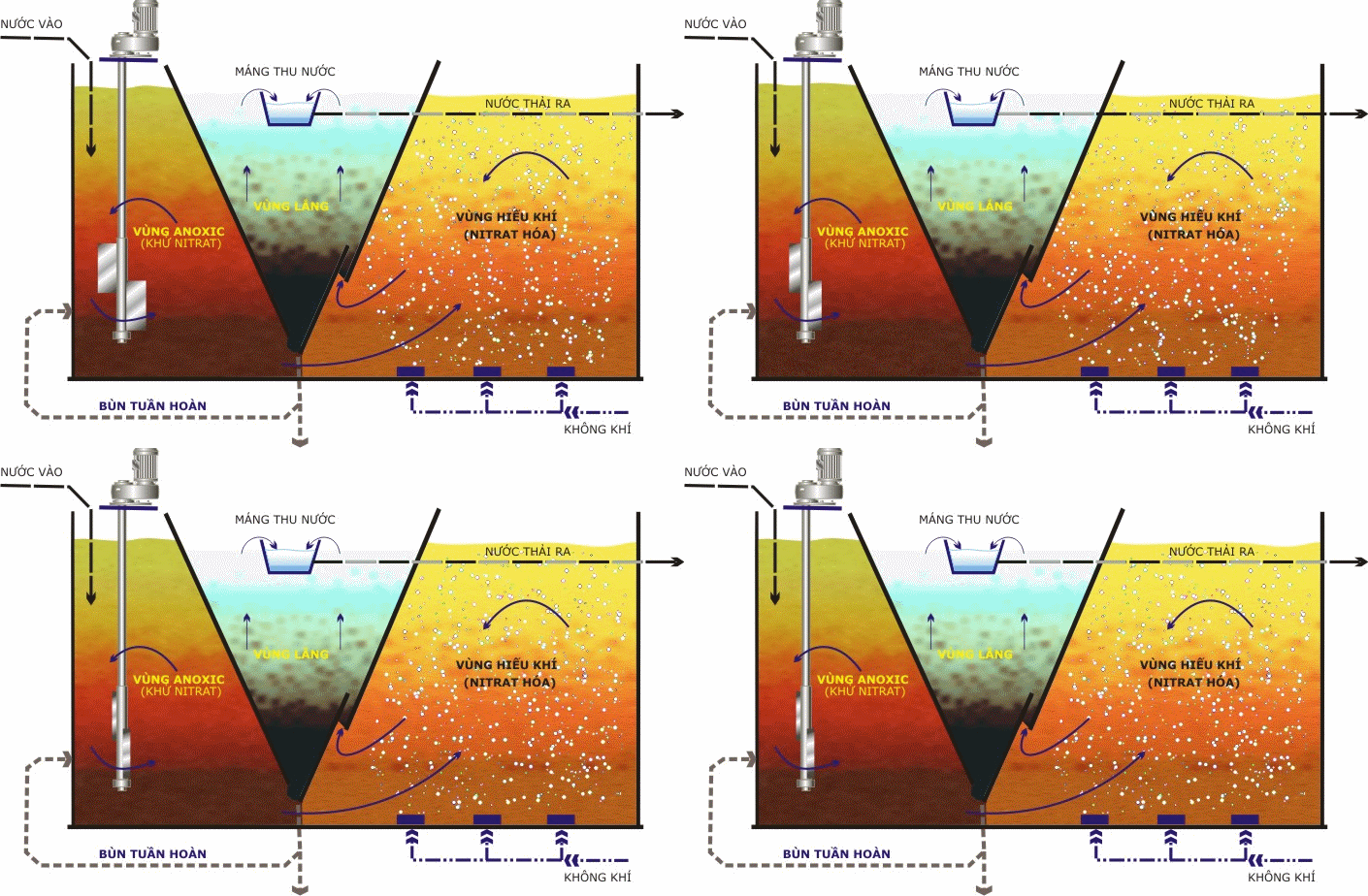
Design of USBF system. (Source: https://giaiphapmoitruong.net)
Main structure of the system: The tank is divided into 3 main compartments: Anoxic compartment (nitrification), Aerobic compartment (nitrification) and reverse flow biological sludge filter compartment - USBF.
2.2 Operating principle:
-
Wastewater is introduced into the system after being pre-treated. In the Anoxic compartment, wastewater and activated sludge are mixed by a submerged agitator system, the processes of carbon removal, nitrate removal and phosphorus removal take place.
-
Then, wastewater flows through the Aerobic compartment through the gap at the bottom of the USBF compartment. Here, there is a submerged aerator system that provides oxygen for aerobic microorganisms to treat organic pollutants.
-
Finally, the wastewater from the Aerobic compartment flows into the USBF compartment and moves from bottom to top, against the vertical sedimentation of the sludge. Polluted impurities are treated through a combination of filtration and biological treatment of the activated sludge itself. The clear water after treatment is collected at the water collection trough and discharged outside.
2.3 Processes taking place in the system:
-
Carbon removal process:
This is the main process of the USBF system, playing an important role in wastewater treatment and affecting other processes. In the USBF system, the carbon treatment process takes place in all 3 compartments Anoxic, Aerobic and USBF.
-
Nitrification and Denitrification Process:
The Anoxic and Aerobic compartments in the system undertake the task of Nitrification and Denitrification. In this process, Nitrosomonas and Nitrobacter bacteria oxidize NH3-N into Nitrate in the aeration zone. Nitrate is recycled back to the Anoxic zone and is continuously reduced. In this reaction, the input BOD is considered as an energy source to reduce Nitrate into Nitrogen molecules.
The combination of two Anoxic and Aerobic compartments in Nitrification and Denitrification brings high efficiency, stability and cost savings to the system:
- Nitrification stage: Ammonium (NH4+) in wastewater is oxidized into Nitrite (NO2-) by Nitrifying bacteria (Nitrosomonas and Nitrosospira) according to the reaction:
NH4+ + 1,5O2 → NO2– + 2H+ + H2O
- Nitrification stage: NO2- is converted into Nitrate (NO3-) by Nitrobacteria according to the following reaction equation:
NO2– + 1,5O2 → NO3–
- Denitrification is the process of separating Oxygen from Nitrate under the action of anaerobic microorganisms. The separated oxygen is reused to oxidize organic matter, so the denitrification process takes place mainly in the anoxic compartment and produces molecular nitrogen as the final product.
NO2– → N2
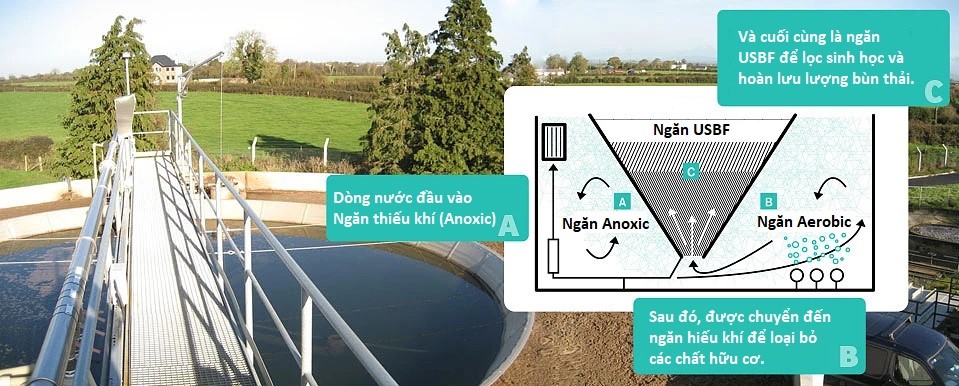
USBF system treatment process (Source: https://en.dsiqualitat.com)
-
Phosphorus removal process:
The mechanical phosphorus removal in this process is improved from Bardenpho technology. Dissolved BOD is fermented in the Aerobic and Anoxic compartments, the product creates a special composition of microorganisms, making them capable of storing Phosphorus. After the assimilation process, Phosphorus will be discharged from the system in the Aerobic compartment.
Phosphorus in wastewater is in the form of PO43-, P2O7 or organically bound form, accounting for about 70%, used to maintain activity, store and transport energy, and develop new cells for microorganisms.
-
Biological filtration and sedimentation in the USBF compartment:
The USBF process is an important stage in the system, the upstream filtration and sedimentation process takes place here. This chamber is funnel-shaped and divided into three zones: the clear water zone above, the suspended sludge zone that acts as a biological filter layer, and the bottom is the settling sludge layer. The wastewater after being stirred will go from the bottom of the settling tank through a specially designed baffle system where the hydraulic flocculation process takes place. The settling chamber creates a steady flow from the bottom to the surface, which causes the flow rate to gradually decrease in the chamber.
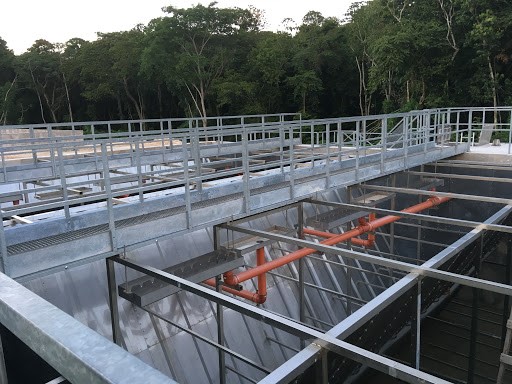
USBF System (Source: https://en.dsiqualitat.com)
3. FACTORS AFFECTING THE WASTEWATER TREATMENT PROCESS OF THE USBF SYSTEM
-
The influence of hydrodynamics: is one of the important factors of the treatment process, it is necessary to ensure the speed of the water flow when entering the USBF compartment to achieve the highest treatment efficiency.
-
Oxygen concentration: because microorganisms only use dissolved oxygen in water to treat wastewater.
-
Trace elements and nutrients: to create a suitable environment for microorganisms to function well, wastewater needs to contain the necessary nutrients, the most important of which are N (Nitrogen), P (Phosphorus), K (Potassium).
-
Influence of other factors: environmental temperature and pH of wastewater directly affect the activity of microorganisms and the solubility of oxygen in water.
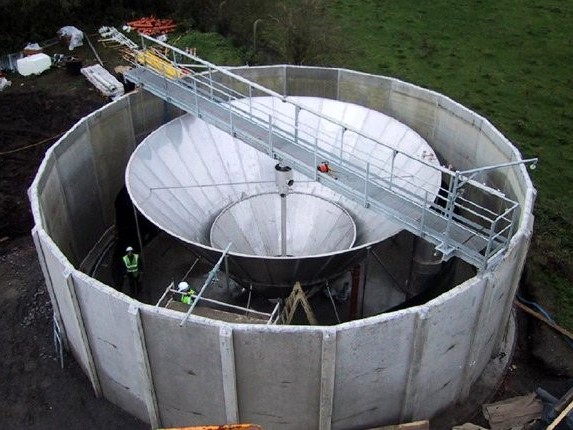
USBF system installation image (Source: https://en.dsiqualitat.com)
4. TREATMENT EFFICIENCY
-
The average COD treatment efficiency is about 60%,
-
BOD treatment efficiency is from 80-99%.
-
High SS treatment efficiency, reaching 75-95% of SS removal capacity.
-
Nitrogen treatment efficiency: the denitrification and nitrification processes are thorough, can reach over 90% treatment efficiency.
-
The maximum phosphorus treatment efficiency can reach 80%.
5. ADVANTAGES AND DISADVANTAGES OF THE USBF SYSTEM
Advantages:
-
Reduced investment costs: USBF combines all treatment stages into one tank, reducing the size and investment costs of the project.
-
Low operating and maintenance costs: with a compact design, minimizing equipment, operating according to the self-flowing mechanism will limit process monitoring and minimize operating and maintenance costs.
-
High treatment efficiency: the technology is designed to remove organic substances such as Carbon, Nitrogen and Phosphorus, so the quality of the output wastewater always meets the standards.
-
Low amount of sludge: the system is designed with a minimum sludge age of 25 days, so the amount of sludge produced is less than that of conventional aerobic biological systems.
-
Odor reduction: under aerobic decomposition conditions and high sludge concentration, odor-causing agents are reduced.
-
Single-unit design: due to the combination of many treatment processes in one tank, USBF technology is almost a complete project.
-
Saving construction area due to the combination of treatment processes in one tank, reducing the overall size of the project.
-
Applicable to many types of wastewater because the system can handle many organic pollutants in the water.
Disadvantages:
-
Difficulty in sludge circulation.
-
Because the tank is a combined system, it will cause difficulties in maintenance and repair.
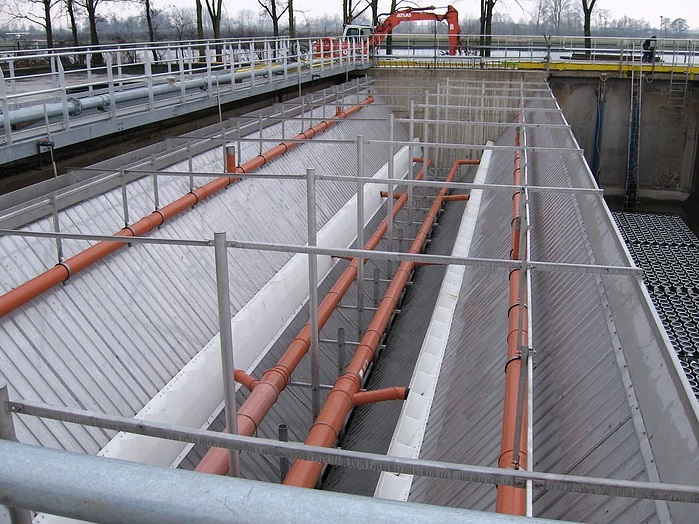
A USBF system is ready to operate (Source: https://en.dsiqualitat.com)
6. CONCLUSION
Currently, USBF is a popular technology used worldwide due to its high treatment efficiency, along with low investment, installation, operation and maintenance costs.
The technology is highly appreciated for its ability to remove BOD, Nitrogen, Phosphorus,... as well as low construction costs, simple system operation, maintenance and maintenance and is mainly used to treat domestic wastewater from households, markets, etc.
Unit providing environmental profile services and construction, operation, maintenance - maintenance of prestigious wastewater treatment systems
Nanoen is a unit operating in the environmental field, during its operation, Nanoen has received the trust of customers for its honesty, dedication and responsibility towards customers and the company's products.
With a team of employees with many years of experience, we have a full range of services from environmental profile consulting to construction design, environmental treatment system operation, microbiological supply, sludge pressing for hire...
Nanoen is always ready to bring the best service experience, suitable for the needs of customers.
Nanoen
NANO ENVIRONMENT TECHNOLOGY - CONSTRUCTION LIMITED LIABILITY COMPANY
Address: 661E/29, Vo Van Kiet Street, Binh Yen A Quarter, Long Hoa Ward, Binh Thuy District, Can Tho City
Hotline: 0941.777.519 - 0907.803.678 - 0901.229.798
Email: nanoentech@gmail.com
Facebook: www.facebook.com/nanoentech