


The System Is Running, but the Effluent Still Fails to Meet Standards
This is a common issue encountered in many industrial facilities.
Although pumps, blowers, and other treatment equipment continue to operate normally, monitoring results may occasionally exceed regulatory discharge limits. Many operators initially suspect equipment failure or process design deficiencies. In practice, however, the root cause is often unstable influent wastewater characteristics.
Sudden changes in hydraulic flow, organic loading, or influent pH can prevent the biological process from adapting quickly, leading to reduced treatment efficiency and elevated concentrations of parameters such as COD, BOD, ammonia (NH₄⁺-N), and Total Nitrogen (TN).
The two most common causes are shock loading and pH fluctuations.
What Is Shock Loading?
Shock loading occurs when a biological wastewater treatment system receives a sudden increase in influent flow rate or pollutant loading that exceeds the treatment capacity of the biological reactor.
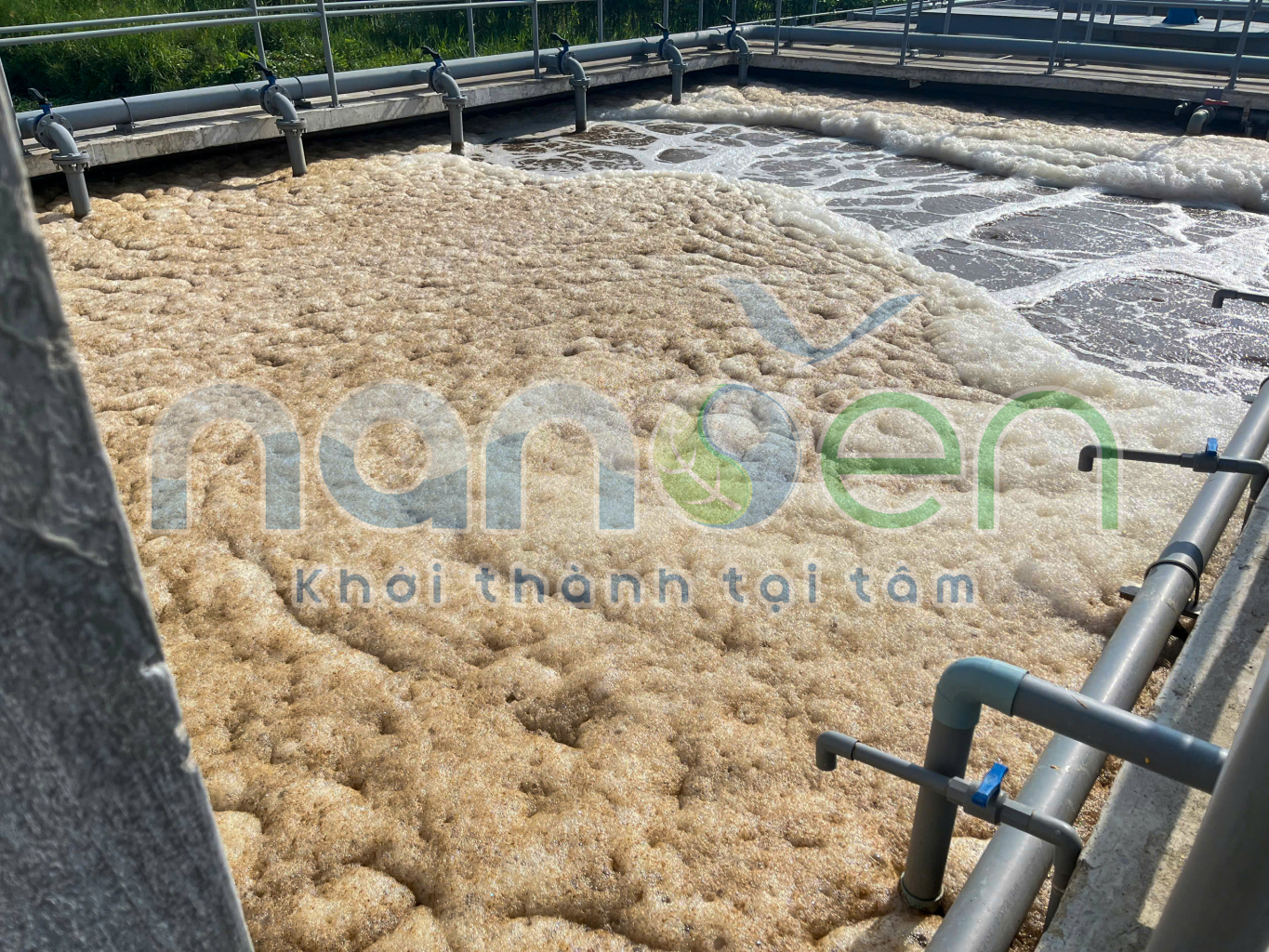
The system was subjected to a shock load.
Source: Nanoen's on-site images.
Common causes include:
-
Batch wastewater discharge.
-
Wastewater discharge during periodic plant cleaning or housekeeping operations.
-
Changes in production capacity or operating schedules.
-
Changes in raw materials or manufacturing processes that alter wastewater composition and organic loading.
Recognizing Shock Loading
Depending on the monitoring capability of each facility, shock loading can be identified through visual observations or operational monitoring data.
Visual indicators
-
Poor sludge settling or weak floc formation.
-
Excessive foam accumulation in the aeration basin.
-
Increased turbidity in the secondary clarifier effluent.
-
Floating sludge or sludge washout from the secondary clarifier.
Indicators requiring laboratory analysis or online monitoring
-
Elevated effluent COD.
-
Increased ammonia (NH₄⁺-N) or Total Nitrogen (TN).
-
Reduced dissolved oxygen (DO) concentration in the biological reactor.
-
Occasional exceedance of regulatory discharge limits in effluent monitoring results.
How Do pH Fluctuations Affect Biological Treatment?
Biological treatment processes generally perform best within a pH range of 6.5–8.5. When the influent pH fluctuates outside this range, microbial activity declines and overall treatment efficiency decreases.
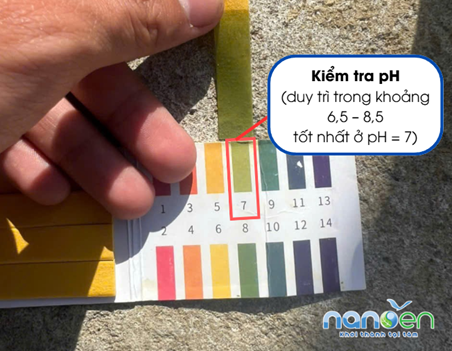
Check pH
Wastewater containing acidic or alkaline streams can cause continuous pH fluctuations, significantly inhibiting microbial activity—particularly nitrifying bacteria, which are responsible for ammonia removal.
Common operational symptoms include:
-
Elevated ammonia concentration.
-
Increased Total Nitrogen.
-
Reduced biological treatment efficiency.
-
Slow recovery of the biological process after upset conditions.
If influent pH is not properly controlled, simply increasing chemical dosage or adjusting operating conditions rarely addresses the root cause.
Solutions for Stable System Operation
1. Equalize Influent Flow and Pollutant Loading
An equalization tank helps stabilize hydraulic flow and organic loading before wastewater enters the biological treatment process, thereby reducing the risk of shock loading.
During major plant cleaning or equipment washing activities, wastewater with high concentrations of organic matter or cleaning chemicals should not be discharged into the equalization tank all at once. Instead, discharge should be distributed over time or managed appropriately to minimize sudden variations in loading and pH.
2. Control Influent pH
Regularly monitor influent pH or install an automatic pH control system for wastewater streams with significant pH variations.
3. Coordinate Production and Treatment Operations
Wastewater treatment operators should maintain close communication with the production department to stay informed about production schedules, plant cleaning activities, raw material changes, or production increases.
Effective coordination enables operators to anticipate changes in influent characteristics and proactively adjust flow distribution, chemical dosing, or aeration rates before treatment performance is affected.
Quick Assessment: Is Your System Experiencing Shock Loading or pH Fluctuations?
If three or more of the following conditions occur repeatedly, the system may be experiencing shock loading or pH fluctuations:
-
Continuous influent pH fluctuations.
-
Rapid decrease in dissolved oxygen despite normal blower operation.
-
Poor activated sludge floc formation.
-
Floating sludge or sludge washout.
-
Increased turbidity after secondary clarification.
-
Intermittent non-compliance with effluent discharge standards.
-
Process instability occurring only during specific production shifts.
-
Chemical dosage adjustments fail to improve treatment performance.
When these symptoms coincide with production cycles, the root cause is often influent variability rather than equipment malfunction or microbial failure. In such cases, priority should be given to evaluating influent flow rate, organic loading, and pH before modifying process design or increasing chemical dosage.
Conclusion
Most wastewater treatment process upsets are not caused by treatment technology itself but by variations in influent wastewater characteristics. Effective control of flow rate, organic loading, and influent pH helps prevent shock loading, maintain a stable biological process, and improve overall treatment efficiency.
For industrial facilities, proactive monitoring and management of influent wastewater conditions are generally more cost-effective than recovering a biological system after it has become unstable.
Nanoen – Your Partner in Optimizing Wastewater Treatment System Performance
With extensive experience in the design, upgrading, operation, and operator training of wastewater treatment systems, Nanoen assists industrial facilities in comprehensively evaluating system performance, identifying the root causes of operational instability, and developing practical solutions tailored to each manufacturing process.
Nanoen's services include:
-
Site inspection and comprehensive assessment of wastewater treatment systems.
-
Process optimization and troubleshooting for operational issues such as shock loading, pH fluctuations, sludge bulking, sludge flotation, and declining treatment efficiency.
-
Upgrading and retrofitting existing wastewater treatment systems.
-
Practical operator training programs customized to each facility's treatment process.
Don't let recurring operational problems increase operating costs or affect regulatory compliance.
Contact Nanoen today for a technical consultation and a comprehensive evaluation of your wastewater treatment system.
Hotline: +84 941 777 519 | +84 907 803 678 | +84 901 229 798
Nanoen
Frequently Asked Questions (FAQ)
How can shock loading be distinguished from biomass failure?
Shock loading is typically a temporary process upset caused by a sudden increase in hydraulic or organic loading. The biological process usually recovers once the abnormal influent condition is eliminated.
Biomass failure, on the other hand, is generally caused by toxic compounds or severe environmental stress that results in prolonged loss of microbial activity.
Monitoring influent flow rate, pH, dissolved oxygen (DO), and production schedules helps determine whether the upset is related to shock loading or biomass deterioration.
Why does shock loading still occur even when an equalization tank is installed?
An equalization tank does not always eliminate shock loading.
Its effectiveness depends on several factors, including:
- Effective storage volume relative to influent fluctuations.
- Adequate mixing performance.
- Proper pump operation and flow equalization strategy.
In many cases, the equalization tank has sufficient capacity, but improper operation significantly reduces its ability to buffer hydraulic and organic load variations.
Is an automatic pH control system always necessary?
Not necessarily.
Automatic pH control is recommended when wastewater exhibits frequent or significant pH fluctuations, particularly in facilities discharging acidic or alkaline process wastewater.
For systems with only minor pH variations, a properly operated equalization tank combined with disciplined operational procedures is often sufficient to maintain stable biological treatment performance.
NANO ENVIRONMENT TECHNOLOGY - CONSTRUCTION LIMITED LIABILITY COMPANY
Address: 661E/29 Vo Van Kiet, Long Tuyen Ward, Can Tho City
Hotline: 0941.777.519 - 0907.803.678 - 0901.229.798
Email: nanoentech@gmail.com
Facebook: www.facebook.com/nanoentec