

Bio-rotating cage is an improved technology based on biological rotating disc technology with the aim of saving costs, simplifying manufacturing and easy application in practice. Bio-rotating cage is made up of a cylindrical mesh cage that is partially submerged in water and rotates slowly around an axis, inside containing a substrate made of synthetic plastic, PP/PVC and HDPE for microorganisms (VSV) to adhere to and develop into a biofilm to decompose wastewater.
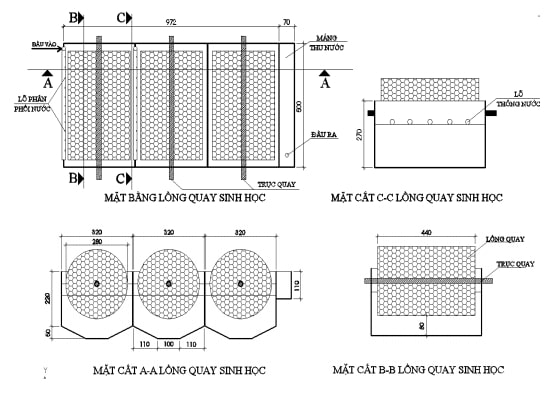
Technological diagram of a biological rotating cage
(Source: Can Tho University Science Journal - Volume 55, No. 6A (2019))
Parts of a biological rotating cage include:
-
Rotating shaft: is the part used to attach to the rotating cage, made of stainless metal, the shape is diverse depending on the manufacturer.
-
Rotating cage: is a mesh cage made of stainless metal, containing biological substrates inside. Commonly used biological substrates are K3 substrate, Biochip substrate, etc.
-
Actuator: is a device that helps the rotating cage rotate around the axis, usually a speed reducer motor with the ability to adjust the number of revolutions or can use a compressed air blower placed at the bottom of the tank.
-
Storage tank: is a tank containing wastewater that needs to be treated and the rotating cage is submerged in water about 35-40% of the volume.
-
Cover: used to protect the rotating cage as well as microorganisms from sunlight and other physical agents.
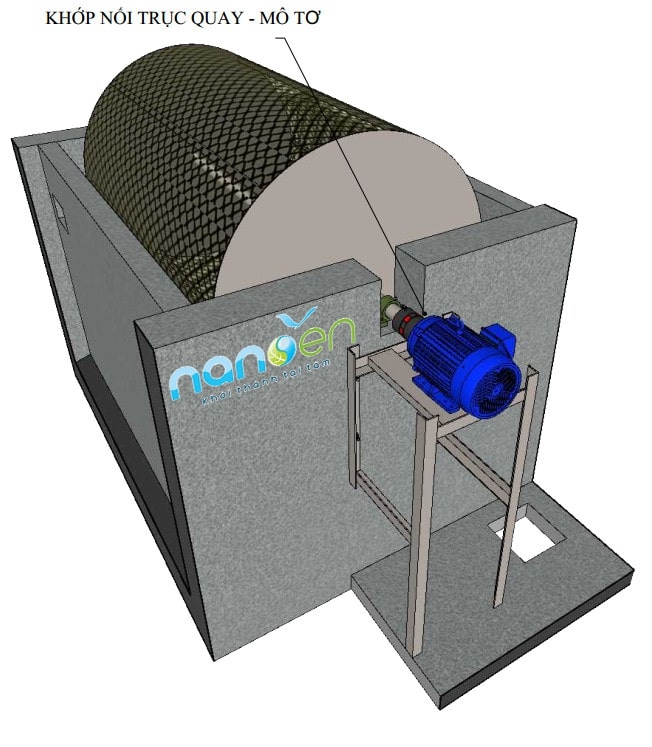
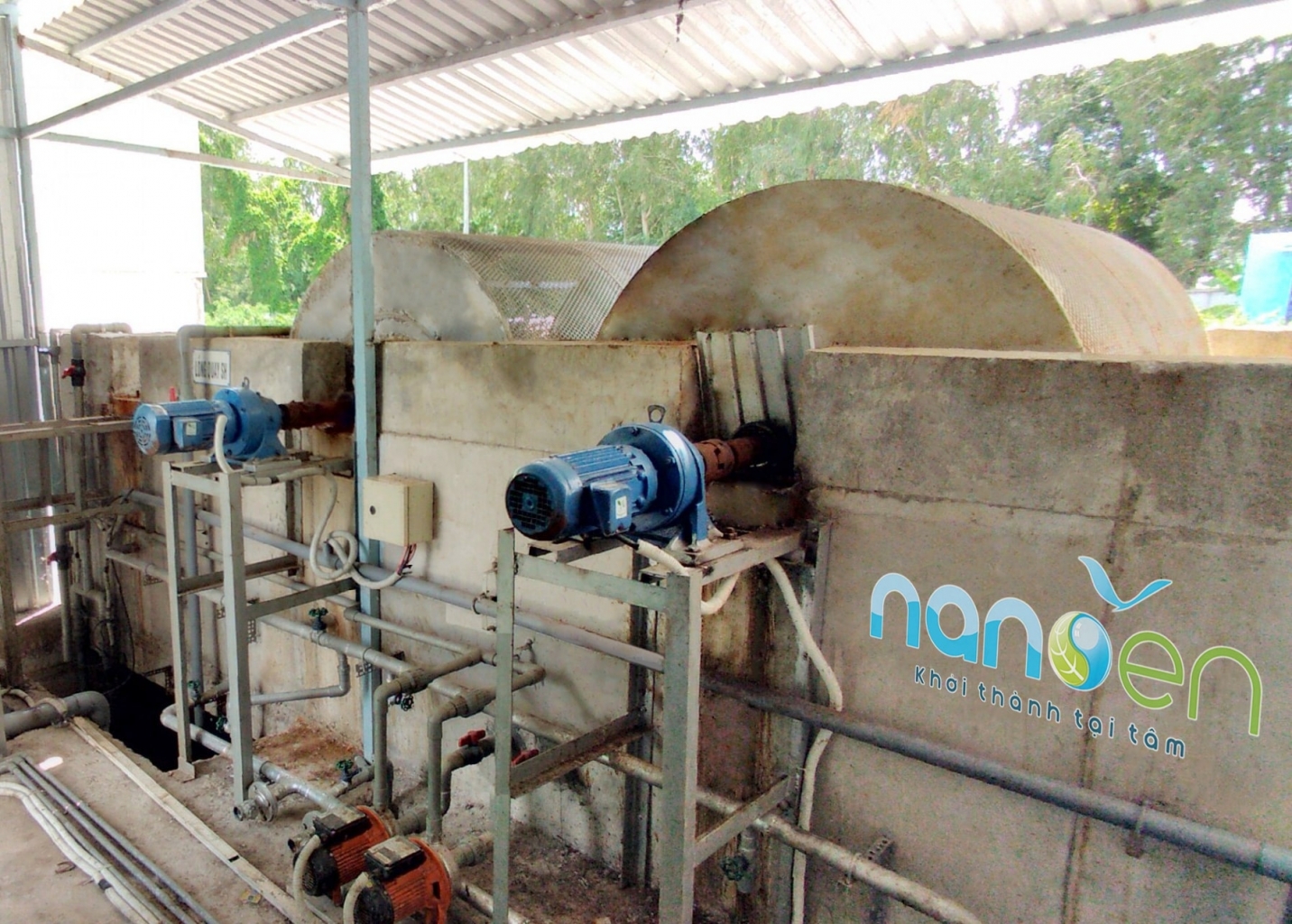
3D image of biological rotating cage in Tinh Bien, An Giang (Nano Environmental Technology Construction Co., Ltd.)
The biological rotating cage is the biological treatment stage in the wastewater treatment system. For the output wastewater to meet the standards, the wastewater must first go through a primary treatment process including physics and chemistry to remove suspended solids as well as rebalance the pH to create a suitable environment for microorganisms, while reducing the BOD and COD content in the water before moving to the treatment stage using the biological rotating cage. The commonly used substrate is K3 substrate, filling about 80% of the volume of the rotating cage.
When operating, the rotating cage rotates around its axis, the microorganisms will adhere to the surface of the carrier and gradually form a biological film, this film will follow the movement of the rotating cage, sequentially contacting wastewater and air, the microorganisms will take oxygen to decompose organic matter, nitrifying wastewater mainly aerobically by reactions similar to those in the activated sludge tank. The rotation of the cage also helps to remove excess solid waste on the rotating cage (thanks to the tearing force) and keep the solids loose in a suspended state, so that it can follow the wastewater out of the tank to the settling tank. The wastewater after passing through the biological rotating cage is passed through the secondary settling tank to separate the sludge and pass it through the next treatment stage, at the same time circulating the sludge back to the sludge tank.
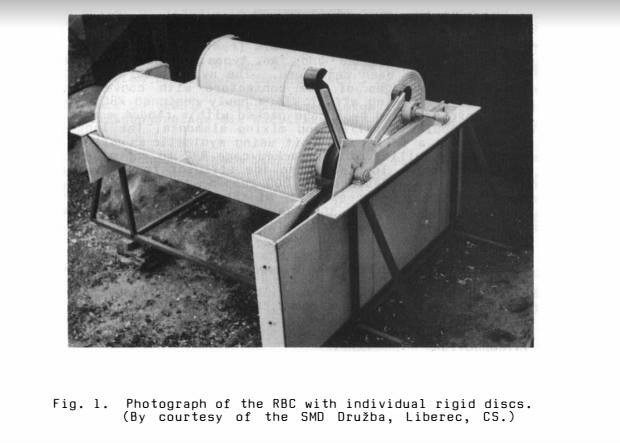
The initial design of the biological rotating cage
A system usually has 2 to 3 biological rotating cages with the same flow rate operating at the same time, depending on the amount of wastewater to be treated. Therefore, biological treatment can be carried out between cages without having to adjust the pH or add nutrients.
The system applying biological rotating cage technology requires a biofilm cultivation period of about 15 days, the rotating cage is allowed to rotate continuously and contact with wastewater to create a biofilm, the color of the substrate gradually changes from white to light brown and finally dark brown, a slimy film appears on the substrate.
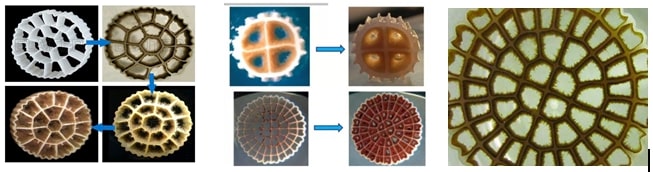
Biofilm formation on microbial media
During the preparation process for the system, when microorganisms have grown thickly on the surface of the substrate, the quality of the output wastewater can reach about 90% of the treatment efficiency. The activity of microorganisms is increasingly stable, the process of creating biofilm on the substrate meets the requirements to move to the completion step and the system is ready to operate at the correct load in the design.
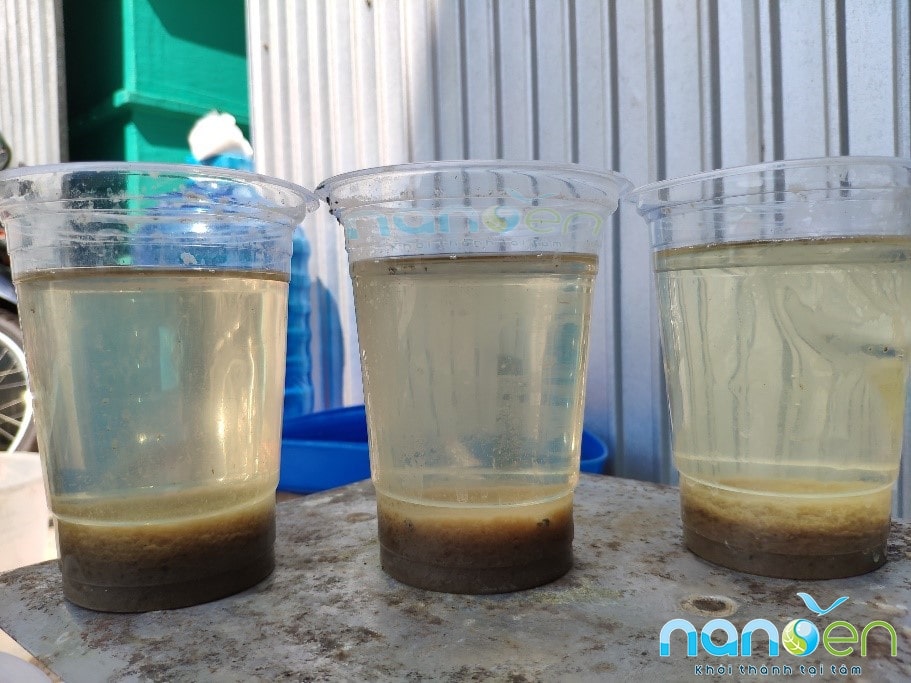
Sludge biomass after settling of 3 biological rotating cages (From left to right: Rotating cage 1, Rotating cage 2, Rotating cage 3)
Based on the composition and properties, mainly wastewater with high organic concentration, the biological rotating cage is often applied to treat wastewater in food and food production and processing factories, especially seafood processing factories. The output wastewater after 30 minutes of static settling meets the national standards for column A wastewater; low water retention time, only about 5 hours; average organic matter loading calculated on the surface area of the biological membrane is 2.06g BOD/m2/day and the stable pH of the water has proven the treatment efficiency of the biological rotating cage system.
Technology has outstanding advantages, but also disadvantages that need to be overcome:
| Advantage | Disadvantages |
|
|
In fact, NANO Environment Technology – Construction Limited Liability Company (hereinafter referred to as Nanoen) has successfully applied biological rotating cage technology to the wastewater treatment system with a capacity of 50m3/day and night of a mango processing factory in Tinh Bien district, An Giang province. Wastewater from canned fruit processing has a high content of chemicals, organic and inorganic pollutants, so when discharged directly into water sources, it will have a negative impact on the ecosystem. Therefore, based on the characteristics of the wastewater as well as the technical and financial requirements of the investor, Nanoen proposed applying 3-stage aerobic biological rotating cage technology to the wastewater treatment project here.
Images of the biological rotating cage before and after operation to form a biofilm (Nanoen)
The quality of the output wastewater of the mango washing wastewater treatment system in Tinh Bien after acceptance has met the criteria of the national technical regulation on industrial wastewater QCVN 40:2011/BTNMT column A, showing that the biological rotating cage technology has operated very successfully, although the production system has added some cleaning chemicals that greatly affect the concentration of wastewater, but due to the improvisation of installing additional physicochemical clusters and the primary treatment stage of coagulation and flocculation, the output wastewater still meets the expected criteria.
Prestigious unit providing environmental profile services and construction, operation, maintenance - maintenance of wastewater treatment systems
Nanoen is a unit operating in the environmental field, during 18 its operation, Nanoen has received the trust of customers for its honesty, dedication and responsibility towards customers and the company's products.
With a team of experienced staff, we have a full range of services from environmental profile consulting to construction design, environmental treatment system operation, microbiological supply, sludge pressing for hire...
Nanoen is always ready to bring the best service experience, suitable for the needs of customers.
Nanoen
NANO ENVIRONMENT TECHNOLOGY - CONSTRUCTION LIMITED LIABILITY COMPANY
Address: 661E/29, Vo Van Kiet Street, Binh Yen A Quarter, Long Hoa Ward, Binh Thuy District, Can Tho City
Hotline: 0941.777.519 - 0907.803.678 - 0901.229.798
Email: nanoentech@gmail.com
Facebook: www.facebook.com/nanoentech