

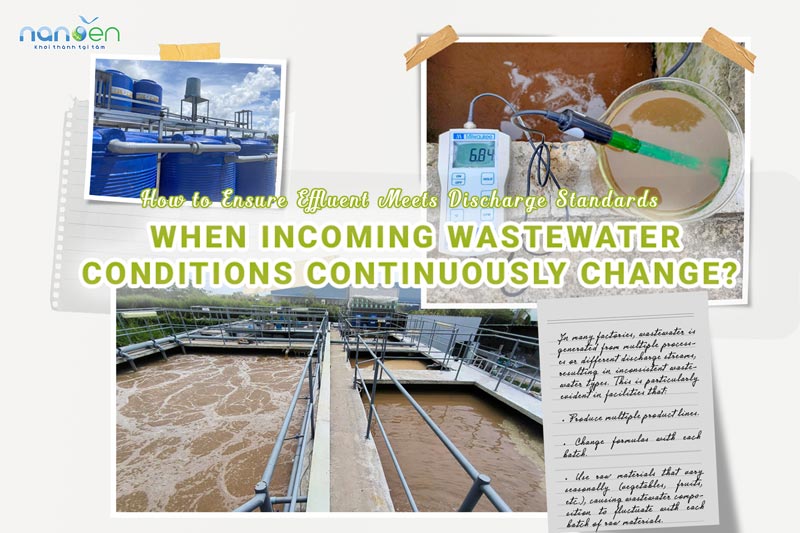
In practical operation of wastewater treatment systems, most enterprises face continuous fluctuations in influent conditions, including wastewater type, characteristics, and flow rate. These variations are often the primary reasons why treated effluent fails to meet discharge standards, leading to serious impacts on production activities and corporate reputation.
So how can effluent quality be effectively controlled to comply with discharge regulations when influent conditions are constantly changing? In this article, Nanoen provides a clear technical analysis of the issue and proposes practical, field-proven solutions.
Continuous Variations in Wastewater Type
Continuous variation in wastewater type refers to a condition in which wastewater generated from the same source exhibits changes over time in composition, concentration, and pollution characteristics, rather than remaining stable. Such fluctuations significantly affect wastewater treatment systems, which typically require relatively consistent influent conditions to operate effectively.
In many industrial facilities, wastewater is generated from multiple processes or different discharge streams, resulting in non-uniform wastewater characteristics. This situation is particularly common in the following types of facilities:
-
Facilities producing multiple product lines, resulting in wastewater with varying characteristics.
-
Batch-based production with frequent formula changes, causing fluctuations in pollutant composition and concentration.
-
Use of seasonally variable raw materials (such as vegetables, fruits, and agricultural products), leading to periodic changes in wastewater composition depending on each raw material intake cycle.
Example: In industries with multiple wastewater streams—particularly seafood processing industries (shrimp, fish, squid, crab, etc.)—the characteristics of influent wastewater continuously fluctuate depending on each production period:
-
Shrimp processing wastewater typically contains high concentrations of proteins and oils/grease, which can easily cause biological shock to the microbial system.
-
Fish processing wastewater usually has a high organic load, significant fat content, and strong odors.
Not only the seafood processing industry, but also chemical, food processing, and textile-dyeing industries frequently change production formulas or use seasonal raw materials, leading to similar fluctuations in wastewater characteristics.
-
Wastewater from shellfish (clams, snails) washing carries large amounts of suspended solids and calcium, increasing TSS levels and causing pipeline clogging.
Continuous fluctuations in influent wastewater parameters (COD, BOD, TSS, pH, etc.)
Changes in production lines or product types are among the most common causes of day-to-day, shift-based, or batch-to-batch variations in wastewater composition and characteristics.
In actual operation, even a sudden change in influent wastewater quality that is not promptly identified can easily lead to system overloading, sludge bulking or flotation, reduced treatment efficiency, or, in severe cases, force the plant to suspend production to investigate operational failures. This directly affects production schedules and operating costs, particularly for facilities operating under tight delivery timelines or relying on seasonal raw materials.
Therefore, in addition to conducting flow measurement and wastewater sampling and analysis in accordance with regulatory requirements, facilities must establish a more flexible and proactive operating strategy. The key lies in clearly identifying the types of wastewater generated by each product processed on a given day, thereby anticipating potential fluctuations in influent characteristics.
Operational parameters that require regular monitoring include pH, BOD, COD, TSS, oil and grease, and salinity. Continuous monitoring enables early detection of “abnormal” wastewater conditions, such as elevated organic loading, rapid pH decline, or oil and grease concentrations exceeding normal operating ranges.
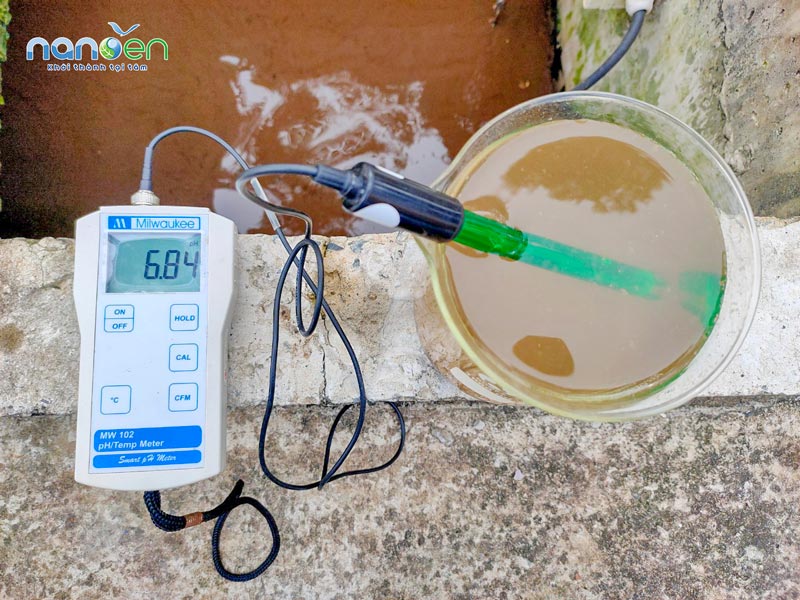
Measure wastewater pH (Image from an actual Nanoen project)
When changes are detected depending on the existing incident or abnormal condition, operators must proactively adjust the system’s technical operating parameters, such as increasing or reducing aeration, adjusting the return sludge rate, supplementing microbial cultures, or modifying the dosage of operational chemicals (PAC, polymer, etc.). Timely adjustments are critical to help the system avoid shock loading and maintain stable effluent quality.
In other words, in a wastewater treatment system, treatment technology is only one component; the operator is the determining factor in whether the system can operate stably and effectively.
Monitoring and Adjustment of the Operating Process
To ensure treatment efficiency, facilities must establish clear operating parameters tailored to the characteristics of each wastewater stream. This forms the foundation for influent management and stable operation of the treatment system.
Influent control planning:
Identify and periodically record the composition and flow rate of each wastewater source. Regularly monitor BOD, COD, pH, TSS, oil and grease, and microbiological parameters to compare with applicable discharge standards and establish early warning thresholds.
See also: Changes to the Vietnamese National Technical Regulation on Wastewater: What should businesses do?
- Continuous parameter monitoring:Use online monitoring instruments or conduct frequent sampling to monitor pH, DO, BOD, COD, and other key parameters.
- Adjustment of chemicals and operating processes:Based on monitoring results, operators adjust the dosage of treatment chemicals (PAC, polymer, chlorine, etc.) and treatment regimes, such as increasing or reducing flow rates, adjusting settling time, and optimizing nutrient concentrations for microorganisms, as appropriate.
- Emergency preparedness and response:Pre-define potential incident scenarios (organic shock loading, abnormal pH, equipment failure) and establish corresponding corrective and response procedures.
Role of Wastewater Treatment Plant Operators
Wastewater treatment plant operators play a critical role in ensuring the stable and efficient operation of the entire treatment system.
Operators must possess solid operational knowledge and a thorough understanding of the specific characteristics of the facility’s wastewater streams in order to make timely and appropriate process adjustments. A competent operator should:
- Close coordination with the production department: Operators must work closely with the production team to stay informed of raw material changes and product changeover schedules. By anticipating the type of wastewater to be generated and the expected organic or hydraulic loading of each production batch, operators can proactively adjust operating parameters in advance. This is a key factor in minimizing shock loading, maintaining treatment efficiency, and ensuring stable effluent quality.
- Comprehensive understanding of wastewater characteristics: Have a clear understanding of the characteristic pollutant parameters of each type of wastewater generated during the production process.
- Continuous process monitoring: Continuously monitor the operation of key equipment such as blowers, pumps, mixers, as well as critical parameters including pH, DO, SV30, to promptly detect operational issues. Common operational problems such as insufficient aeration, sludge flotation, or sludge blockage require rapid corrective actions.
- Troubleshooting experience: Beyond understanding system configuration and process principles, practical troubleshooting experience is a decisive factor in operational performance. Operators must be able to quickly recognize abnormal signs such as insufficient aeration, sludge flotation, pH fluctuations, or sudden increases in pollution loading. Timely and technically appropriate responses help the system avoid shock loading, reduce the risk of non-compliance with QCVN discharge standards, and maintain stable effluent quality.
See also: QCVN 40:2025/BTNMT - Industrial wastewater standards and compliance solutions
Operating a wastewater treatment system is not merely about monitoring equipment; it also requires a proactive mindset and rapid response to fluctuations in influent parameters.
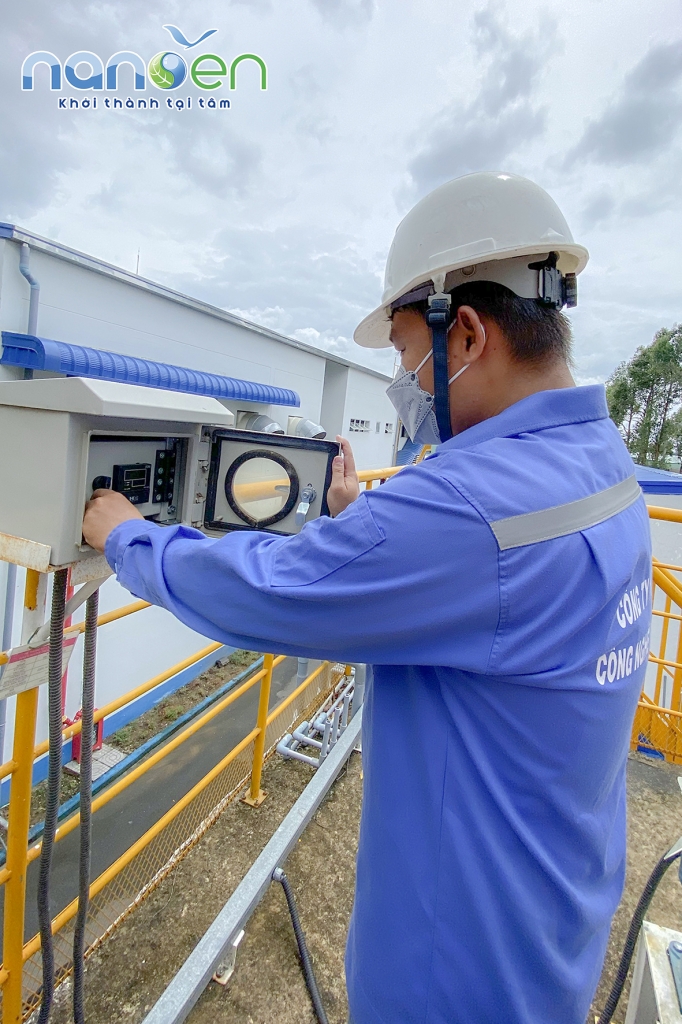
Nanoen's operations staff at the construction site.
Operators must be capable of assessing operational situations, early identifying fluctuations in influent wastewater characteristics, and implementing timely adjustments. This is a key factor in maintaining system stability, minimizing operational risks, and ensuring that effluent quality consistently complies with applicable discharge regulations.
Investment in operator training is therefore indispensable. When operators possess solid technical knowledge, a clear understanding of process principles, and hands-on troubleshooting experience, the treatment system can operate more efficiently, with reduced risks of interruptions or non-compliance with discharge standards.
Two Implementation Approaches to Ensure Stable System Operation
With increasing demands for wastewater management and stricter compliance requirements for discharge standards, facilities must adopt an appropriate operational strategy to control risks and ensure stable system performance. Depending on the production model, available technical resources, and operational objectives, facilities typically choose one of the following two approaches:
-
Hire a company to operate the wastewater treatment system.

Wastewater treatment system operation services
This option is suitable for facilities seeking to ensure stable treatment performance, minimize operational risks, and optimize labor costs. The key benefits for businesses include:
-
A team of highly qualified and experienced operating engineers, ensuring that effluent quality consistently meets applicable discharge standards.
-
Consistent and standardized system operation, reducing errors arising from staff turnover or insufficient operational experience.
See also: Operating a wastewater treatment system
-
Rapid incident response, minimizing system downtime and preventing disruptions to production activities.
-
Comprehensive operation logs, reports, and documentation, supporting facilities during inspections and audits by regulatory authorities.
-
Flexible cost structure, eliminating the need to maintain a permanent in-house technical team and reducing personnel-related risks.
This solution is particularly suitable for facilities with continuous production operations, strict requirements for stable effluent quality, or those experiencing challenges in managing in-house operating personnel.
See also: The benefits of hiring a wastewater treatment system operator
-
Training internal operations staff according to business requirements.
Xem thêm: Đào tạo vận hành hệ thống xử lý nước thải theo yêu cầu của doanh nghiệp
See also: Training on operating wastewater treatment systems tailored to business requirements
Many businesses aspire to operate autonomously, but their current workforce lacks proper training or experience in handling system failures. Nanoen's intensive training program offers the following benefits:
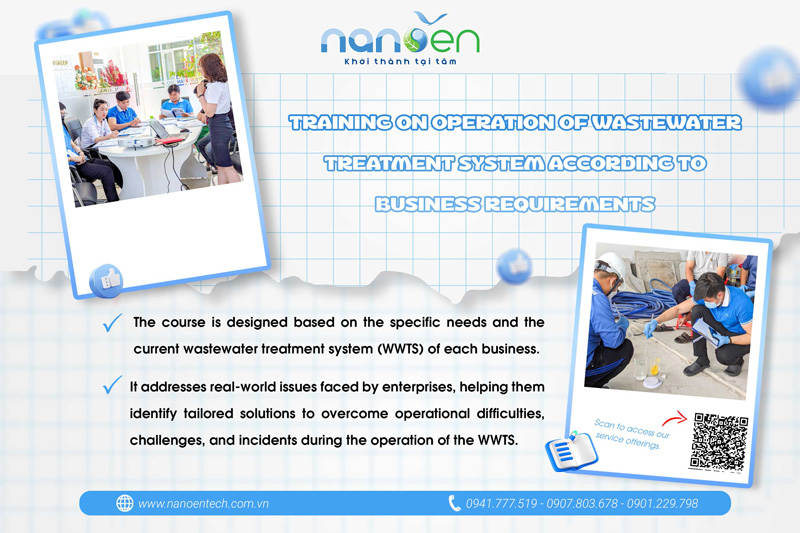
Training on operating wastewater treatment systems as required by businesses
-
On-site training conducted directly on the plant’s actual treatment system, enabling operators to gain a clear understanding of process flows, applied technologies, and operational weaknesses at each treatment stage.
-
Equipping operators with incident recognition and rapid troubleshooting skills for common issues such as organic shock loading, sludge flotation, pH fluctuations, and insufficient aeration.
-
Enhancing the ability to adjust system operation according to different wastewater characteristics, particularly suitable for multi-product manufacturing facilities such as seafood processing, food processing, and textile dyeing plants.
-
Standardizing operating procedures, record-keeping, and reporting, ensuring compliance with legal requirements and environmental safety regulations.
-
Reducing reliance on individual operators, thereby maintaining system stability during personnel changes.
This solution is suitable for enterprises aiming to achieve operational autonomy and develop a long-term in-house technical team.
Regardless of the selected approach, the ultimate objective is to ensure that the wastewater treatment system operates safely, stably, and in compliance with discharge standards, while minimizing operational risks and additional costs. With extensive hands-on experience in operating wastewater treatment systems across various industrial facilities and a team of highly trained engineers, Nanoen is ready to accompany enterprises through both outsourced operation services and customized operator training programs, ensuring sustainable system performance and full compliance with environmental regulations.
Nanoen
NANO ENVIRONMENT TECHNOLOGY - CONSTRUCTION LIMITED LIABILITY COMPANY
Address: 661E/29 Vo Van Kiet, Long Tuyen Ward, Can Tho City, Can Tho
Hotline: 0941 777 519 - 0901 229 798 - 0907 686 717
Email: nanoentech@gmail.com
Facebook: www.facebook.com/nanoentech