
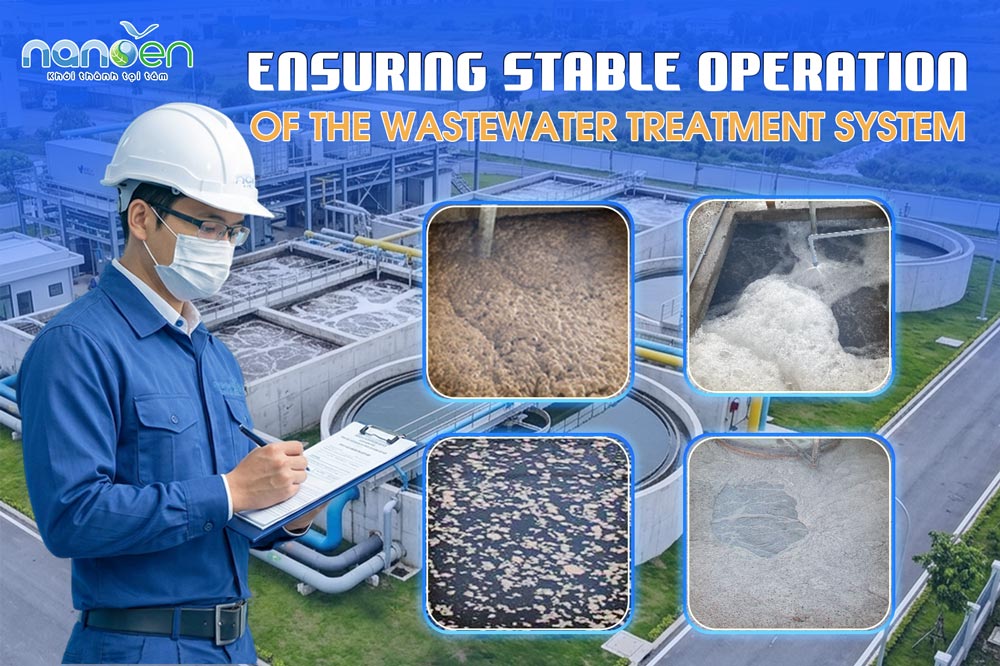
During operation, a wastewater treatment plant (WWTP) plays a critical role in ensuring that effluent quality complies with environmental discharge standards. However, in practice, many facilities experience technical failures that lead to unstable operation, reduced treatment efficiency, and increased operational costs.
Proper identification of issues and implementation of appropriate corrective measures not only enhance system performance but also support sustainable industrial operation.
Common Operational Issues in WWTPs
1. Hydraulic Overloading
When influent flow exceeds the design capacity, hydraulic retention time (HRT) decreases, resulting in lower pollutant removal efficiency.
This typically occurs when:
-
Production is expanded without upgrading the treatment system
-
Influent flow fluctuates hourly or seasonally
-
The original design lacks an adequate safety factor
See more: What should businesses do when a wastewater treatment system is overloaded?
2. Biological Process Upset

Activated sludge tank experiencing shock loading (Source: Nanoen)
Microorganisms are the core of biological treatment processes (e.g., aerobic and anoxic tanks). When microbial activity is inhibited or biomass is lost, removal efficiencies of BOD, COD, and nitrogen decrease significantly.
Possible causes include:
-
Insufficient nutrients or dissolved oxygen (DO)
-
Shock loading or sudden changes in influent characteristics
-
Unsuitable temperature or pH
Learn more: Common biological issues in wastewater treatment system operation
3. Sludge Bulking and Poor Settling
Poor sludge settling or sludge flotation in the clarifier negatively impacts effluent quality and may cause odor problems.
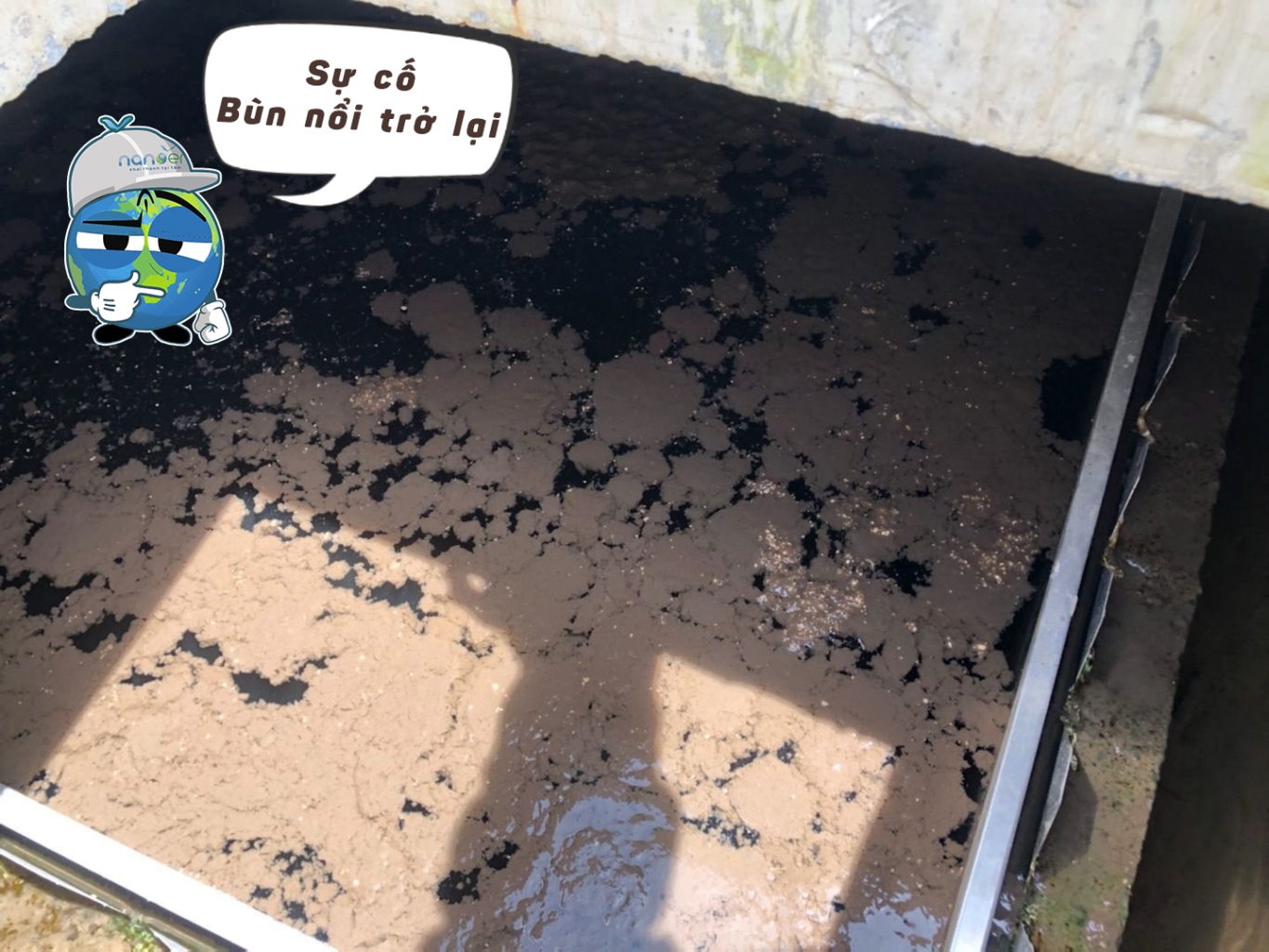
Sludge flotation and rising sludge phenomenon (Source: Nanoen)
Common causes:
-
Excessive filamentous bacteria growth
-
High organic loading
-
Unstable operating conditions
See details: How to handle sludge bulking and sludge flotation?
4. Equipment Failure and Operational Instability
Malfunction or degradation of equipment such as blowers, pumps, and chemical dosing systems can directly impact system performance.
In addition, improper operation procedures are a common cause of reduced treatment efficiency.
Root Causes of Unstable Operation
In addition to specific failures, instability is often caused by:
-
Fluctuations in influent flow and pollutant loading
-
Lack of control over key parameters (MLSS, DO, pH, etc.)
-
System overloading or lack of optimization
-
Insufficient operator training
Accurate root cause identification is essential for effective troubleshooting.
Corrective Measures and Optimization Strategies
1. System Assessment and Diagnosis
Conduct a comprehensive evaluation of the WWTP to identify root causes and determine appropriate corrective actions.
2. Process Control and Optimization
-
Control influent flow rate and pollutant loading
-
Adjust operational parameters (DO, MLSS, pH, etc.)
-
Supplement nutrients when necessary
Operational Tip:
Routine monitoring of MLSS, DO, and influent loading helps detect early warning signs before major system failures occur.
3. System Retrofit and Upgrade
If the system no longer meets actual operational demand, retrofitting or upgrading should be considered.
Reference: Wastewater treatment system upgrading solutions
4. Operator Training and SOP Standardization
Training operators ensures proper system management and reduces operational risks.
See more: Wastewater treatment system operation training for enterprises
5. When Should a WWTP Be Upgraded?
System upgrading is recommended when:
-
Influent flow exceeds design capacity
-
Effluent does not meet discharge standards
-
Repeated operational failures occur
-
Operating costs increase abnormally
Timely upgrades improve treatment performance and optimize long-term costs.
Integrated Solutions from Nanoen
With extensive experience in wastewater treatment, Nanoen provides comprehensive services:
-
System inspection and performance evaluation
-
Troubleshooting and operational optimization
-
System retrofitting and upgrading
-
Technical training and technology transfer
Each solution is customized to specific system conditions, ensuring efficiency and sustainability.
Conclusion
Stable operation of a wastewater treatment system is essential for regulatory compliance, cost control, and sustainable production.
With strong technical expertise and practical experience, Nanoen delivers tailored solutions—including system upgrades, operation outsourcing, and technical training—to help businesses maintain efficient and compliant WWTP operation.
Professional and Reliable Environmental Consulting Services in the Mekong Delta
Nano Environment Technology – Construction Limited Liability Company (Nanoen) is a trusted and professional provider of environmental consulting and environmental services in the Mekong Delta region. Throughout our years of operation, Nanoen has earned the confidence of clients through our integrity, dedication, and strong sense of responsibility toward customers as well as the quality of our products and services.
With a team of highly experienced professionals, we offer comprehensive environmental solutions, ranging from environmental documentation consulting to design, construction, and operation of environmental treatment systems. Our services also include wastewater treatment system operation training, environmental system operation support, and the supply of biological treatment products.
We are committed to delivering optimal and practical solutions that fully meet the diverse needs of enterprises, while ensuring compliance with current environmental regulations.
Contact Nanoen today for FREE consultation
Hotline: 0941.777.519 - 0907.803.678 - 0901.229.798
Nanoen
NANO ENVIRONMENT TECHNOLOGY - CONSTRUCTION LIMITED LIABILITY COMPANY
Address: 661E/29 Vo Van Kiet, Long Tuyen Ward, Can Tho City
Hotline: 0941.777.519 - 0907.803.678 - 0901.229.798
Email: nanoentech@gmail.com
Facebook: www.facebook.com/nanoentech