

The World Health Organization (WHO) said that if there are no measures to collect and properly treat pig waste, it will seriously affect human and animal health and cause serious environmental pollution.
1. ORIGIN OF LIVESTOCK WASTEWATER
Livestock wastewater is generated from livestock activities and discharged into receiving sources. The most important characteristic of this type of wastewater (especially pig farming) is that it contains organic substances and nutrients expressed through environmental parameters such as: COD, BOD5, TN, TP, SS,... these parameters are the main causes of environmental pollution.
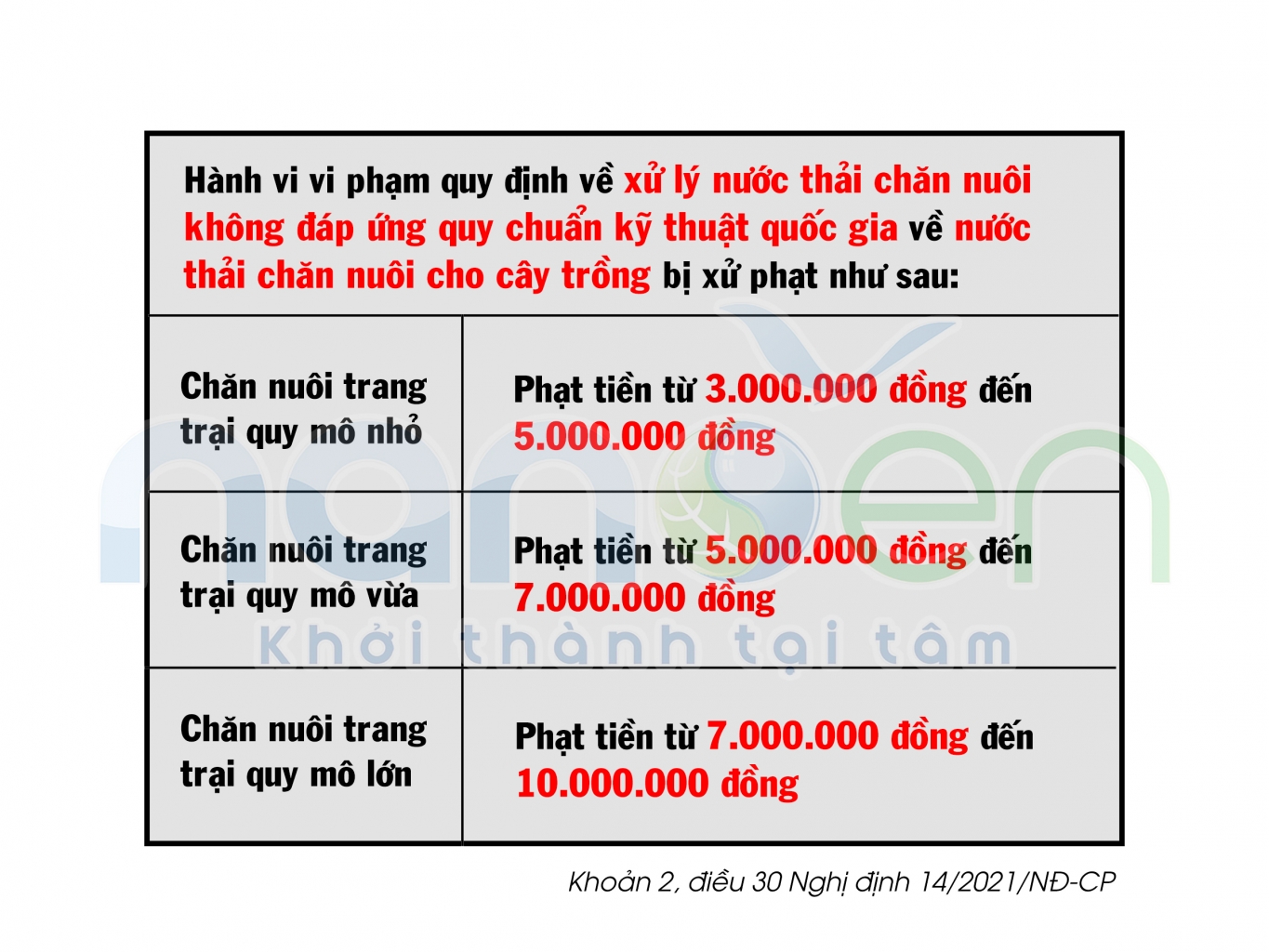
2. TECHNICAL STANDARDS FOR LIVESTOCK WASTEWATER PARAMETERS, REGULATIONS ON ADMINISTRATIVE SANCTIONS IN THE LIVESTOCK SECTOR
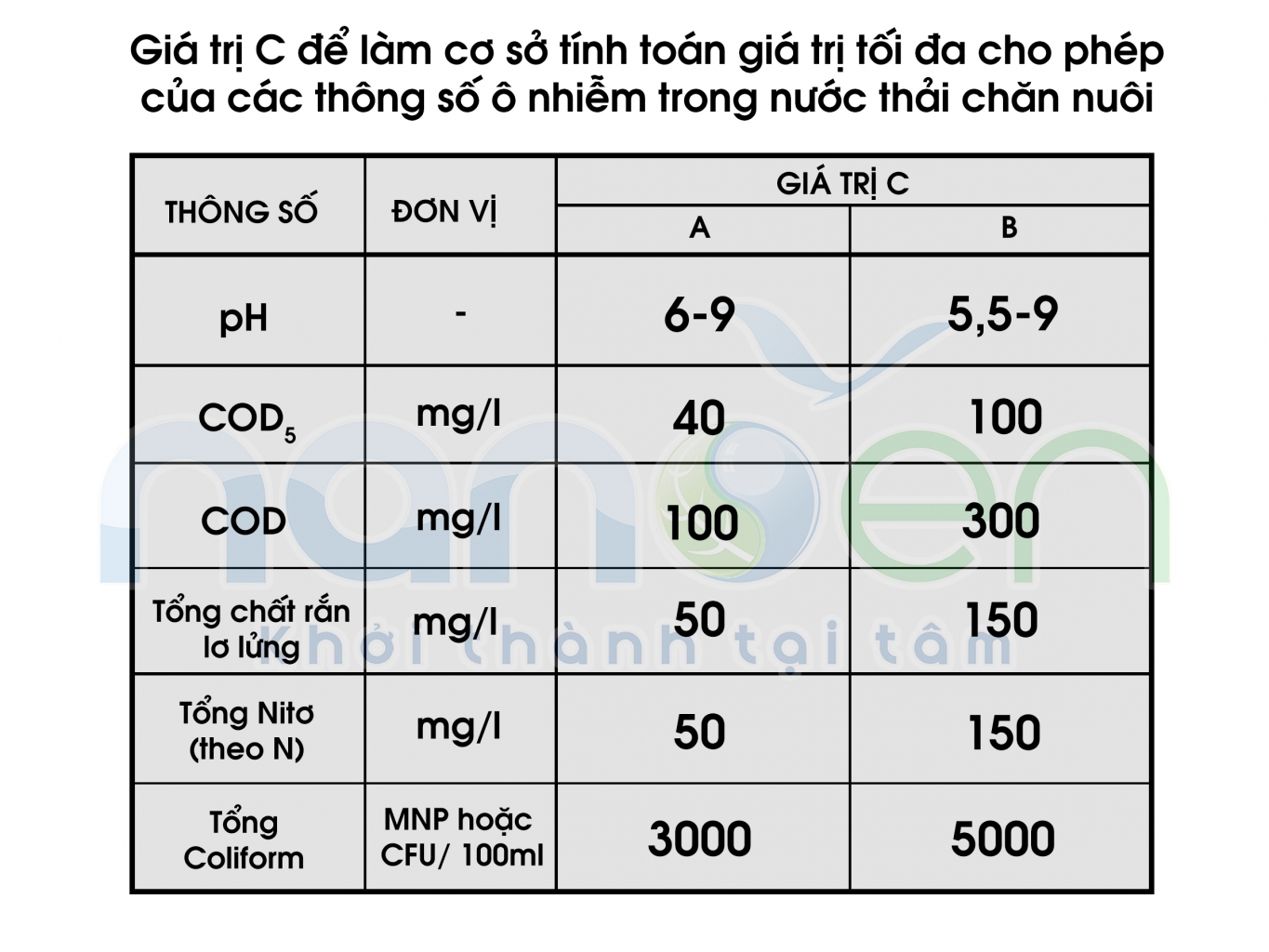
According to Appendix II attached to Decree 08/2022/ND-CP at level III, the livestock industry is on the list of production, business and service types with high risk of causing environmental pollution. It can be seen that the Government is very interested and tightening environmental management and protection activities.
3. METHODS OF LIVESTOCK WASTEWATER TREATMENT
In a complete Livestock Wastewater Treatment System, many treatment methods need to be combined:
3.1 Biogas:
In the article Biogas pits are “saviors” for livestock farmers, Nanoen introduced to readers the benefits that Biogas pits bring to life. Applying Biogas pits in the livestock farming process helps to minimize economic aspects, keep the surrounding landscape green, clean, beautiful, and avoid dangerous pathogens.
Biogas – a product of the anaerobic decomposition of organic matter, is considered an on-site energy source to replace kerosene, firewood, etc. Anaerobic decomposition is the process of decomposing organic matter by anaerobic microorganisms that takes place in the absence of oxygen.
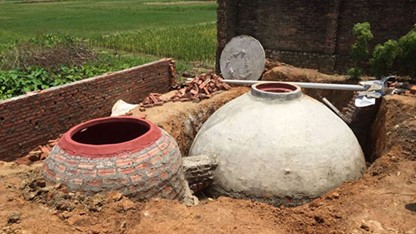
Biogas digester waste is rich in nutrients and is a valuable source of fertilizer. However, this type of waste is still harmful to the environment, so it needs to be dried for a long enough time or composted before use.
3.2 Pig farming wastewater treatment method using plants
This is a method of livestock wastewater treatment that provides stable treatment efficiency, low treatment costs, does not require chemicals or nutrients for aquatic plants to grow, does not require complex technology, and does not require regular operation. In addition, aquatic plants can be used as fertilizer or animal feed.
After a few days, when the impurities have partially settled, the wastewater will be transferred to the aquatic plant tank. Here, the waste will be processed by the aquatic plants in the tank.
Aquatic plants and microorganisms living under the roots will use organic and inorganic substances to grow and develop. In addition, aquatic plants will be planted to cover the surface of the tank, limiting the release of waste into the air.
Water from the aquarium can be used to clean the barn and water plants and vegetables in the garden.
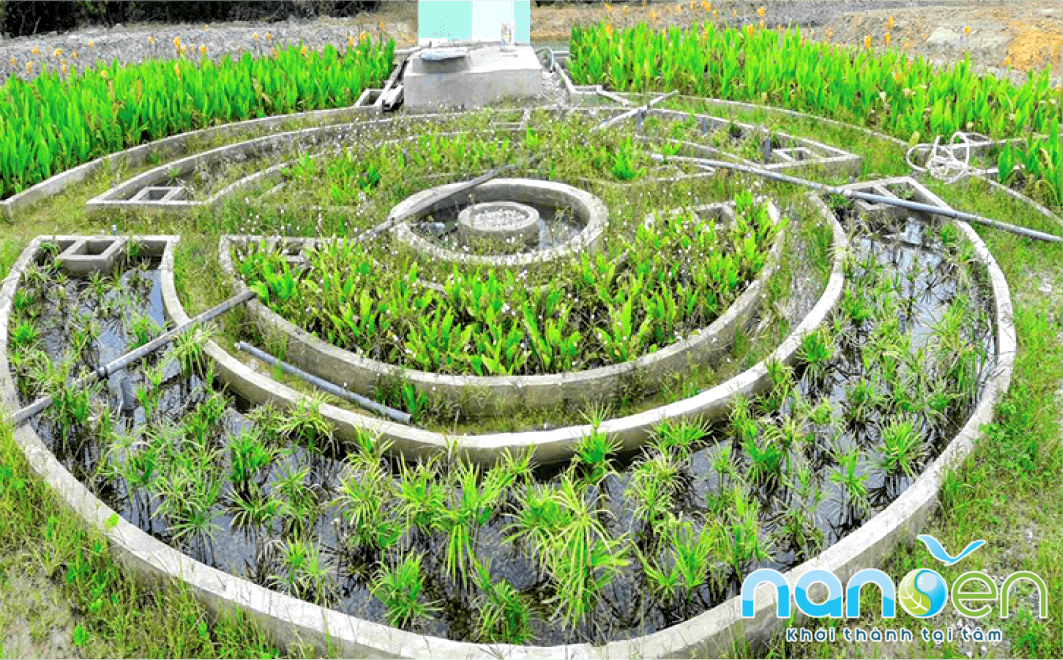
WETLAND Technology (Source: Nano Environment Company; photos taken from actual construction)
3.3 Method of treating livestock wastewater by biological filtration
The process can operate in a completely aerobic manner (arranging the air distribution head below the substrate layer) or partially aerobic, partially anoxic (arranging the air distribution head in the middle of the substrate layer). During operation, the water flow and gas will push and compress the substrates to the surface of the mesh layer between the substrates, which creates conditions for (mechanical) filtration of solids in the wastewater. During the backwash process, the water flows down at a fast speed, causing the substrate layer to be dispersed again.
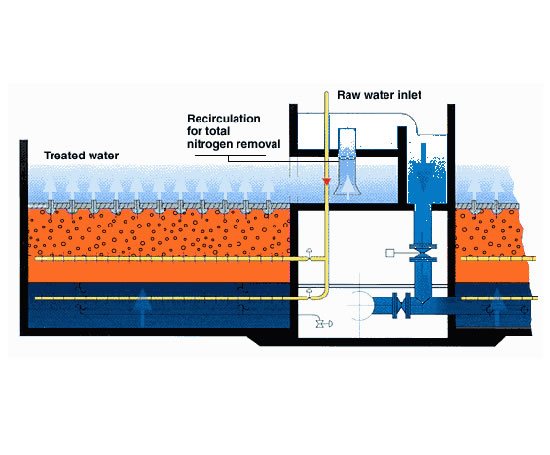
Reference image: Livestock wastewater treatment method by biological filtration
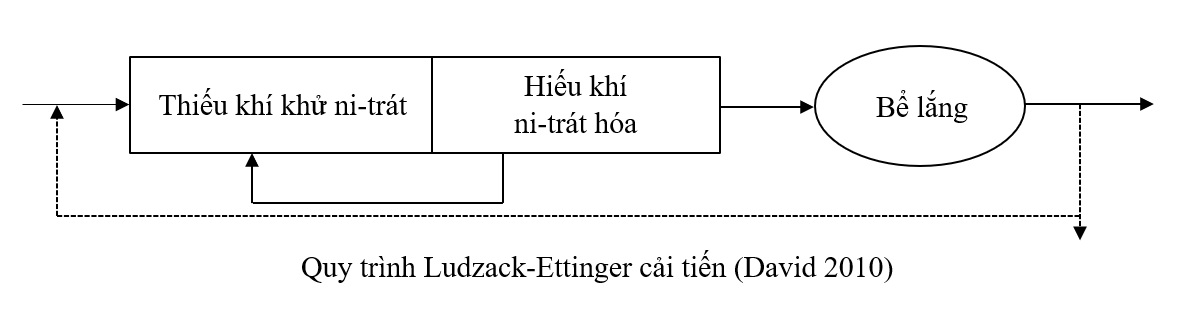
3.4 Livestock wastewater treatment method by combined aerobic and anoxic activated sludge
Aerobic and anoxic method (AO) - this combined method aims to remove organic matter and nitrogen most effectively. Nitrification is carried out in the aerobic compartment, denitrification is carried out in the anoxic compartment.
3.5 Method of treating livestock wastewater by oxidation ditch
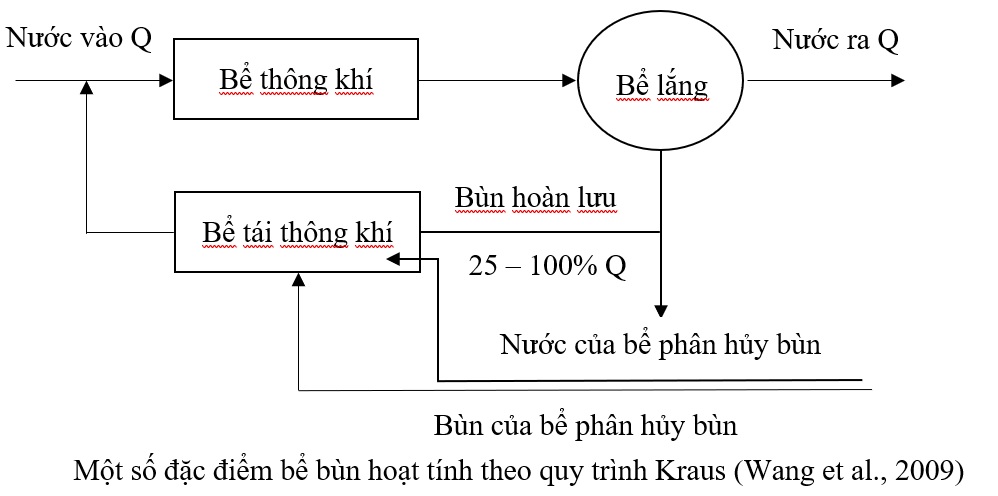
It is a ring or oval ditch equipped with mechanical equipment for aeration. The body oxidation ditch is used to remove BOD in wastewater, nitrification, and denitrification of wastewater. This type of tank requires a large area, so it is only suitable for communities in areas with cheap land prices.
Prestigious unit providing environmental profile services and constructing wastewater treatment systems
Nanoen is a unit operating in the environmental field. During its operation, Nanoen has received the trust of customers for its honesty, dedication and responsibility towards customers and the company's products.
With a team of experienced staff, we have a full range of services from environmental profile consulting to construction design, environmental treatment system operation, microbiological supply, sludge pressing for hire...
Nanoen is always ready to bring the best service experience, suitable for the needs of customers.
Nanoen
NANO ENVIRONMENT TECHNOLOGY - CONSTRUCTION LIMITED LIABILITY COMPANY
Address: 661E/29, Vo Van Kiet Street, Binh Yen A Quarter, Long Hoa Ward, Binh Thuy District, Can Tho City
Hotline: 0941.777.519 - 0907.803.678 - 0901.229.798
Email: nanoentech@gmail.com
Facebook: www.facebook.com/nanoentech