


Environmental permit - part 2
30/03/2022
Related Post

Plugging and Sealing Unused Wells in Vietnam: Regulations, Procedures and Key Requirements for Businesses [2026 Update]
Nanoen – An unused well may still pose risks to groundwater resources. If it is not properly handled, the well can become a pathway through which surface water and contaminants migrate into aquifers or allow water to circulate between different water-bearing layers.
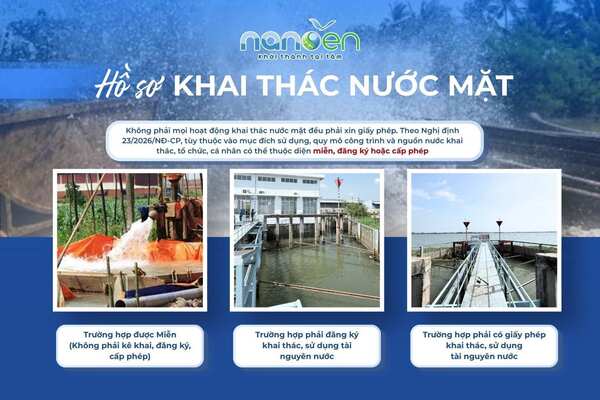
Surface Water Extraction Dossier 2026: Exemption, Registration, or Licensing?
Nanoen – Not all surface water extraction activities require a permit. Under Decree 23/2026/ND-CP, businesses fall into three categories depending on their usage purpose, scale, and water source: exempt, registration required, or licensing required. Identifying your category correctly from the start ensures proper procedures, accurate paperwork, and avoids delays. Here is a breakdown of key regulations and preparation steps for 2026.
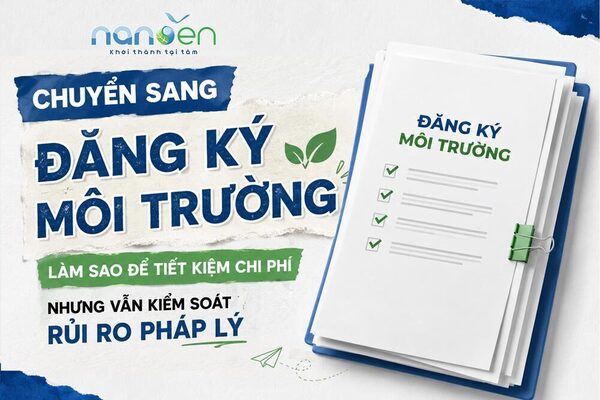
Switching to Environmental Registration: How to Save Costs While Controlling Legal Risks?
Nanoen – Environmental registration is not merely an administrative procedure, but the highest legal commitment a business can make regarding its waste generation sources and treatment facilities.

Continue with Environmental Permit or Switch to Environmental Registration: Which Option Is Right for Businesses?
Nanoen – Many businesses that have already been granted an Environmental Permit may, under new regulatory thresholds, no longer be subject to Environmental Permit requirements and may be eligible to switch to Environmental Registration.

Understanding Environmental Registration and the Ex-Post Inspection Mechanism under Resolution No. 66.19/2026/NQ-CP
Nanoen – Resolution No. 66.19/2026/NQ-CP introduces a new regulatory approach to environmental registration, simplifying procedures while strengthening ex-post compliance responsibilities. Businesses need to clearly understand the nature of environmental registration, distinguish between provincial and commune-level receiving authorities, and properly prepare dossiers, operational data, and supporting records to ensure compliance throughout their operations.
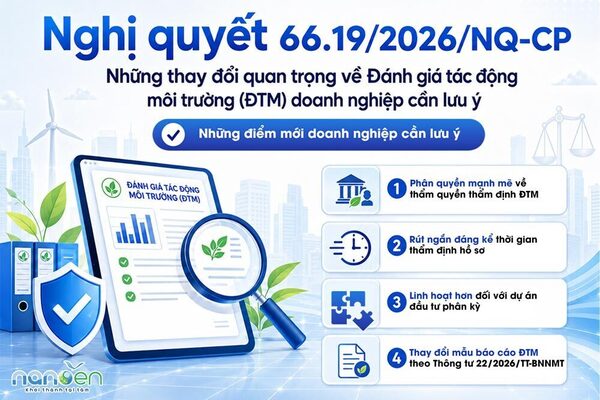
Key Changes in EIA Regulations Under Resolution 66.19/2026/NQ-CP
Nanoen – Resolution 66.19/2026/NQ-CP, enacted on May 18, 2026, has introduced significant amendments to environmental regulations, particularly regarding Environmental Impact Assessment (EIA) procedures. This is considered a milestone in administrative reform, aimed at streamlining regulatory procedures, accelerating dossier processing times, and strengthening decentralization to local authorities for project appraisal and approval.