

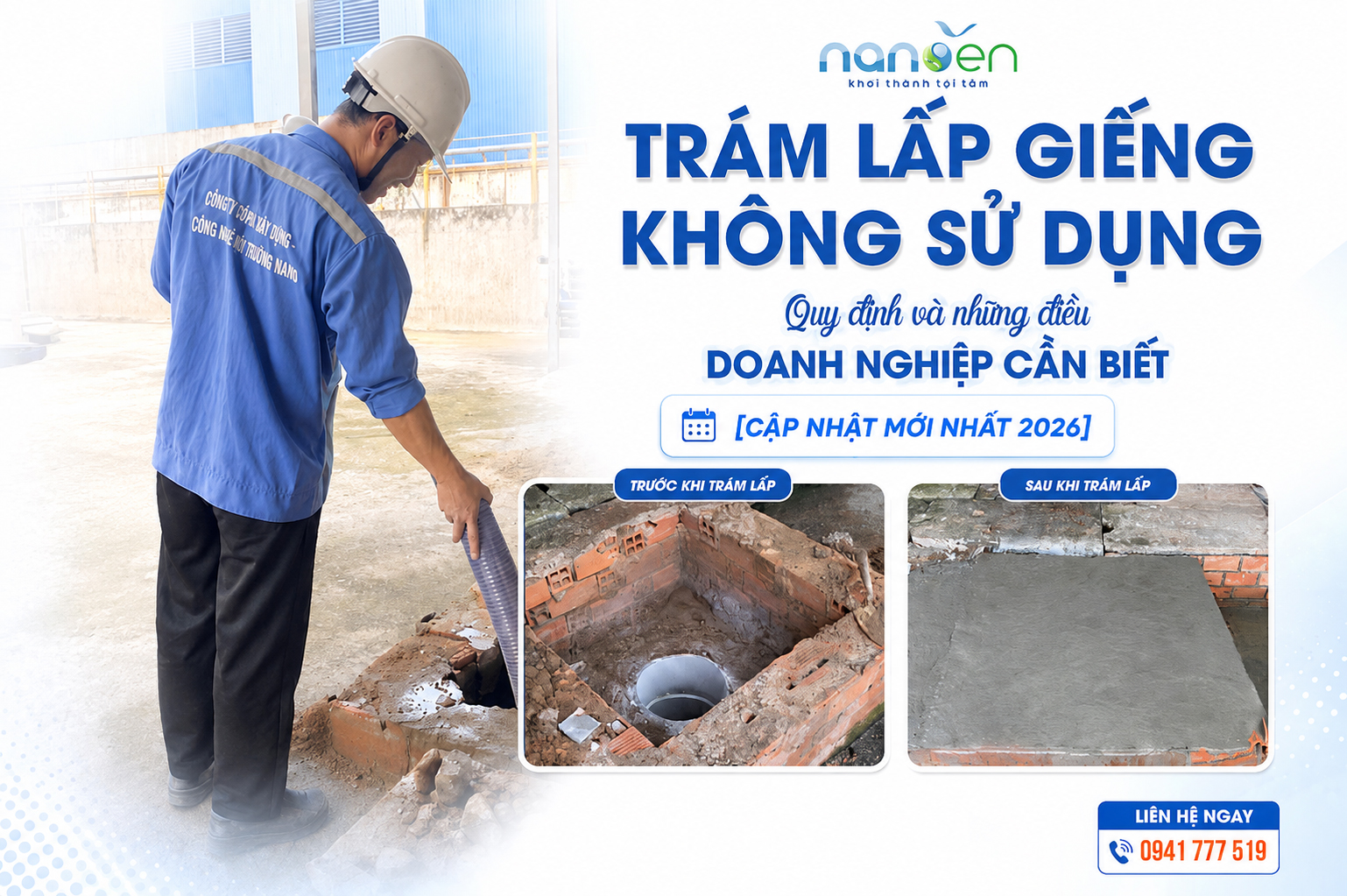
Requirements for plugging and sealing unused wells are stipulated under Clause 1, Article 31 of the 2023 Law on Water Resources, while detailed technical requirements are provided in National Technical Regulation QCVN 83:2024/BTNMT, promulgated together with Circular No. 22/2024/TT-BTNMT.
Accordingly, current regulations require certain damaged wells, wells that are no longer in use, or wells for which there is no plan for continued use to be properly plugged and sealed.
Which Unused Wells Must Be Plugged and Sealed to Protect Groundwater?
The requirement may apply to the following types of wells:
-
Wells used for groundwater investigation, exploration and extraction.
-
Boreholes used for geotechnical investigations, foundation treatment or underground construction works.
-
Boreholes used for geological and mineral exploration, excluding oil and gas wells.
Why Do Unused Wells Need to Be Plugged and Sealed?
A drilled well may extend tens or even hundreds of metres underground and penetrate multiple geological layers.
When a well becomes damaged or remains unused for an extended period, its structure and casing system may deteriorate. This can increase the risk of creating pathways through which water or contaminants from the ground surface can migrate downward into groundwater.
The primary purpose of well plugging and sealing is to:
-
prevent surface water and contaminants from entering aquifers; and
-
prevent hydraulic communication between different aquifers or water-bearing layers through the well.
Therefore, plugging and sealing an unused well does not simply involve closing or filling the wellhead at ground level.
The entire wellbore must be properly treated using a suitable technical approach in order to minimize potential impacts on groundwater quality and groundwater safety.
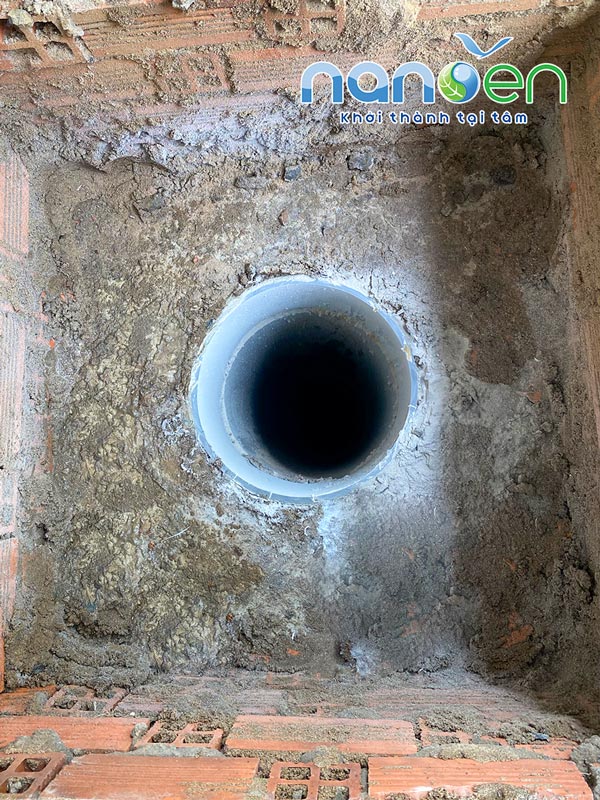
Unused well
Source: Actual Nanoen project
Procedure for Plugging and Sealing an Unused Well
The process should be carried out systematically, from notification and site assessment to technical execution and completion reporting.
Step 1 – Notification
The well owner must submit a written notification to the competent authority at least 10 days before the plugging and sealing work begins.
Step 2 – Inspection and Assessment
Basic information about the well must be identified, including its depth, diameter, groundwater level, current condition, and whether the casing can be removed.
Step 3 – Well Cleaning
Waste, obstructions, and impurities inside the well must be removed before the plugging and sealing work is carried out.
Step 4 – Preparation
Prepare the required sealing materials and construction equipment, and calculate the quantity of materials based on the actual condition of the well.
Step 5 – Plugging and Sealing Works (Critical Stage)
The sealing materials are placed into the well section by section, while the casing and wellhead are treated in accordance with the predetermined technical method.
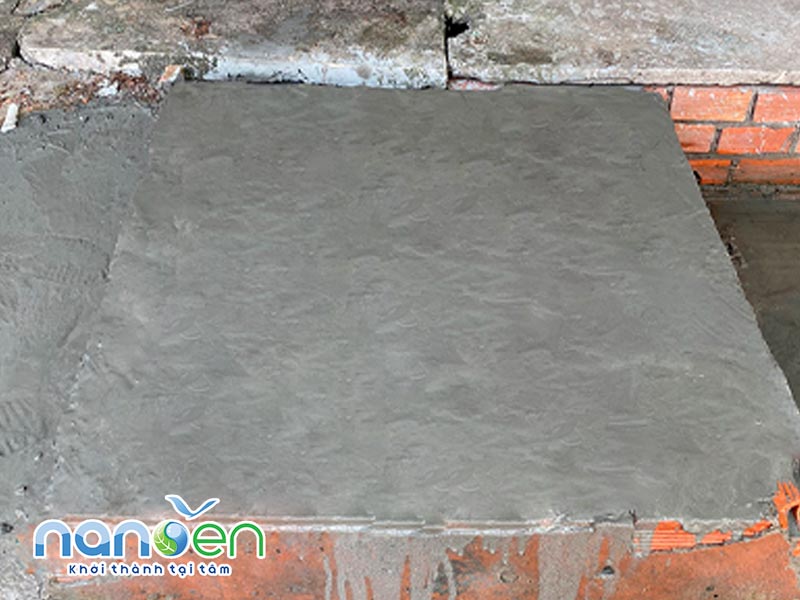
Well after completion of plugging and sealing
Source: Actual Nanoen project
Step 6 – Completion Report
After the work is completed, a written report on the plugging and sealing results must be submitted to the relevant management authority.
Completion of Construction Does Not End the Documentation Obligations
After the well has been plugged and sealed, the well owner is still required to complete the applicable reporting procedures.
For cases falling within the scope of the relevant regulations, the completion report must be submitted within 10 days from the date the well plugging and sealing work is completed.
Depending on the type of well and the responsible entity, the report must be prepared using the corresponding form prescribed under QCVN 83:2024/BTNMT.
Therefore, a well plugging and sealing project must address two aspects simultaneously:
Technical compliance in construction and regulatory compliance in documentation.
Completing the physical work while overlooking notification or reporting requirements may create compliance risks when a company reviews its water resources documentation or when an inspection is conducted by the competent authority.
Legal Risks of Failing to Properly Plug and Seal an Unused Well
According to Article 12 of Decree No. 290/2025/NĐ-CP, violations related to well plugging and sealing may be subject to administrative penalties.
Violations Involving Household Wells
A fine ranging from VND 300,000 to VND 500,000 may apply to the following violations:
-
Failure to plug and seal a dug well used for household purposes.
-
Failure to notify the competent state authority or submit a report on the results of plugging and sealing an unused well.
-
Failure to notify the relevant management authority of the time and location of the well plugging and sealing work.
A fine ranging from VND 500,000 to VND 1,000,000 may apply for failure to plug and seal a drilled well used for household purposes.
Violations Involving Industrial Facilities and Projects
For well systems used for irrigation, industrial production, mineral exploration or geological investigation, failure to properly plug and seal a well after it is no longer in use may be subject to higher penalties.
A fine ranging from VND 20,000,000 to VND 30,000,000 may apply to cases involving failure to plug and seal wells associated with medium- and large-scale projects as prescribed by regulations.
For facilities owned by an organization or enterprise, the applicable penalty for the same violation may be doubled, resulting in a fine ranging from:
VND 40,000,000 to VND 60,000,000.
In addition to monetary penalties, violating organizations and individuals may also be required to properly plug and seal the well and implement remedial measures if the violation has resulted in groundwater contamination.
This means that postponing the handling of an unused well does not eliminate the obligation to plug and seal it. Instead, the delay may result in additional regulatory risks and remediation costs.
What Should Businesses Consider Before Plugging and Sealing an Unused Well?
Proper well plugging and sealing requires more than simply filling an opening with material.
Businesses should first determine the actual condition of the well, establish an appropriate technical method and identify the applicable administrative requirements.
Important factors include:
-
well depth;
-
well diameter;
-
well structure;
-
condition of the casing;
-
groundwater conditions;
-
site accessibility;
-
construction conditions; and
-
the estimated volume of sealing materials required.
These factors directly affect both the technical method and the quantity of materials required for the work.
For this reason, businesses should work with a contractor that has practical field experience and understands the applicable water resources regulations.
Nanoen Provides Plugging and Sealing Services for Unused Wells
With practical experience in the environmental and water resources sectors, Nanoen provides consulting and construction services for plugging and sealing unused wells.
Nanoen supports businesses throughout the process, including:
-
assessing the existing condition of the well;
-
reviewing applicable regulatory requirements;
-
developing an appropriate technical method;
-
preparing the required materials and equipment;
-
carrying out the plugging and sealing work; and
-
completing the relevant documentation based on the specific circumstances of each project.
Before recommending a technical solution, Nanoen prioritizes an assessment of the actual condition of each well.
This is because factors such as well depth, diameter, structural configuration, casing condition and construction conditions directly affect the technical approach and the quantity of sealing materials required.
Conclusion
Plugging and sealing an unused well does not simply mean filling the well until it is full.
The work must address the actual well structure, follow an appropriate technical method, and comply with the applicable regulatory requirements in order to minimize potential risks to groundwater resources.
Contact Nanoen via HOTLINE 0941.777.519 - 0907.803.678 - 0901.229.798 for consultation on an appropriate well plugging and sealing solution based on actual site conditions and current regulatory requirements.
For businesses, addressing unused wells properly also helps reduce risks related to environmental and water resources compliance during document reviews, inspections or project implementation.
Nanoen
NANO ENVIRONMENT TECHNOLOGY - CONSTRUCTION LIMITED LIABILITY COMPANY
Address: 661E/29 Vo Van Kiet, Long Tuyen Ward, Can Tho City
Hotline: 0941.777.519 - 0907.803.678 - 0901.229.798
Email: nanoentech@gmail.com
Facebook: www.facebook.com/nanoentech